
The World of Time: From the Pulse of Stars to the Dance of Atoms

The World of Time: From the Pulse of Stars to the Dance of Atoms

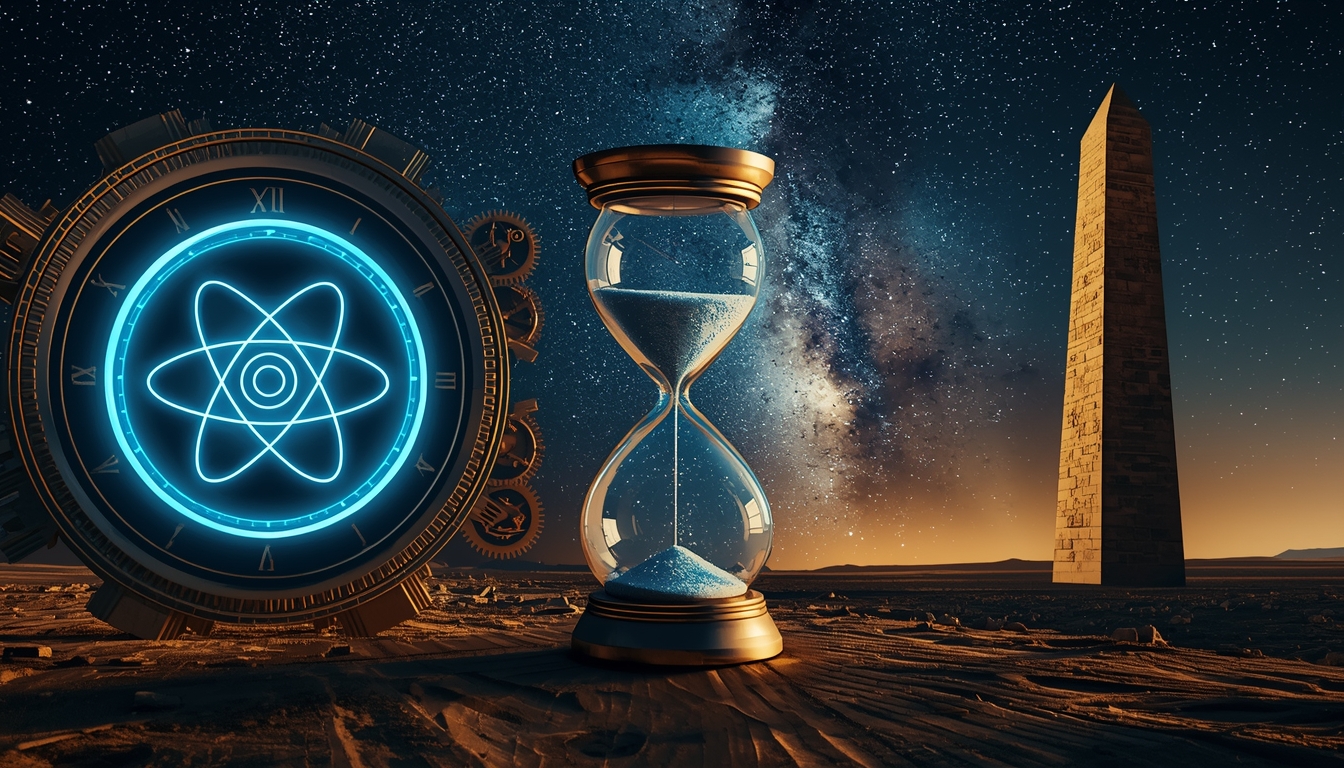
Have you ever wondered: Is time a fixed reality or just an illusion invented by our minds to survive chaos? Thousands of years ago, there was no ticking of digital clocks, only the "pulse of the universe." Humanity began its journey with time watching the shadow of a towering obelisk in the sands of Egypt, where light wrote the story of the day upon the earth. Time was not cold numbers then, but a mystical dance between the Earth and the Sun. Today, we live in the age of "Absolute Precision." We no longer measure time by the passing of seasons, but by the vibrations of a cesium atom that doesn't miss a second in billions of years. But... between the primitive "shadow clock" and the modern "atomic clock," lie amazing tales of genius, wars, and "crazy" physics that tell us time is "elastic"; slowing down at the edges of black holes and speeding up in the heart of the void. In this encyclopedia, we take you on a journey starting from the moment of the Big Bang, passing through Al-Jazari's amazing mechanical machines and the charm of Swiss watches, all the way to Einstein's relativity where time stops completely. Get ready... for the watch on your wrist is not just gears, it is the history of the universe abbreviated in a "tick."
Chapter 1: Natural Clocks (When the Sky Was the Only Screen)

Chapter 1: Natural Clocks (When the Sky Was the Only Screen)

Before the world knew "gears" or "batteries," humans read time in the pages of the sky. Time was not numbers, but shadows dancing on the sand, and a hidden pulse in the movement of the stars.

1. The Shadow Dial (Gnomon): The Silent Language of Columns The story began with the "Gnomon"; the simplest and oldest timing tool known to mankind. It was a simple stick planted in the ground, but it possessed a superpower: "translating the Earth's movement around the Sun into a visual language."

How did it work? Humans watched the length of the shadow; if the shadow was very long, they knew it was time to hunt (early morning), and if the shadow shrank beneath their feet, they realized the sun was in the middle of the sky (noon).

The Amazing Truth: This simple tool is the "legitimate grandfather" of all our modern clocks; the idea of a "clock hand" moving in a circle is a direct simulation of the shadow of the column that used to rotate around it with the movement of the sun.

2. Pharaonic Obelisks: Giant Engineering of Time In the Nile Valley, the ancient Egyptians were not content with a simple stick, but built "Obelisks" that scraped the clouds. These obelisks were not just religious monuments, but "giant civil clocks."

Dividing the Day: Thanks to the vast shadow of the obelisk, the Egyptians were able to divide the day into regular parts, allowing them to organize their rituals, farming schedules, and work on building the pyramids.

The Amazing Truth: Obelisks acted as public "alarms"; once the shadow reached a certain mark on the ground, the entire city knew the time without needing a wristwatch.

3. Cosmic Clocks: Star Maps and First Calendars When night fell and shadows disappeared, humans didn't stop calculating time. Their gaze turned to the "Great Cosmic Clock" (the stars and the moon).

The Lunar Calendar: Humans noticed that the moon changed its face every 29.5 days, and so the "Month" was born.

The Star Watcher: In Babylon and Egypt, priests watched for the appearance of certain stars (like Sirius) to know the dates of the Nile floods or the changing of seasons. The stars were the "second hands" in a cosmic clock that never stops.

The Shadow Doesn't Lie: The shadow of the sundial moves in a clockwise direction in the Northern Hemisphere, which is the only reason our clocks today rotate in this direction!

Chapter 2: Fluid Clocks (When Humans Conquered Darkness)

Chapter 2: Fluid Clocks (When Humans Conquered Darkness)

As soon as the sun sets, the "shadow clock" becomes useless. Here, ancient humans faced a major dilemma: how do we measure time at night or under clouds? The answer lay in elements that never stop moving: flowing water, running sand, and burning incense.

1. The Water Clock (Clepsydra): The Time Thief The word "Clepsydra" literally means "water thief." This technology appeared in Babylon, Egypt, and China, relying on a simple physical law: fluid flow.

How did it work? Water dripped from one vessel to another at a constant rate. By monitoring the low or high water level, the illuminated or dark hours could be determined with amazing accuracy.

Its Evolution: In Greece, water clocks became so complex that they triggered primitive "alarms" to wake philosophers or announce the end of court pleadings.

2. The Hourglass: The Sailor's Patient Companion While water froze or evaporated, the hourglass appeared as a brilliant and stable alternative, especially at sea.

Defying Gravity: The hourglass was the only tool unaffected by ship vibrations or humidity. Sailors relied on it to set watch shifts and calculate nautical distances.

The Amazing Truth: The sand used was not ordinary beach sand; it was a ground mixture of marble dust and boiled eggshells to ensure perfect flow that never clumped.

3. Wax and Incense Clocks: The Scent of Time In the Far East (China and Japan) and in European monasteries, they used "fire" to measure time.

Incense Clocks: Incense sticks were made with different lengths and scents; so if the scent changed, the sleeper or worshiper knew that a certain hour had passed!

Candle Clocks: Candles were graduated with numbered marks. As the candle burned, one number after another disappeared, announcing the consumption of part of the day's life.

Water Accuracy: Water clocks were so accurate that they were used in ancient hospitals to time medication doses and monitor patient pulses.

Symbolism of Sand: Throughout history, the hourglass became a symbol of the "finiteness of life," which is why we always see it in paintings that speak of time.

Chapter 3: The Golden Age of Mechanics (When the East Gave the Machine a "Soul")

Chapter 3: The Golden Age of Mechanics (When the East Gave the Machine a "Soul")

At a time when the world relied on simple water vessels, a generation of geniuses appeared in the East who refused to let time be "silent." They wanted time to speak, to move, and to play music. Here, "Mechanical Engineering" (the science of devices) was born, which was the foundation for all our engines today.

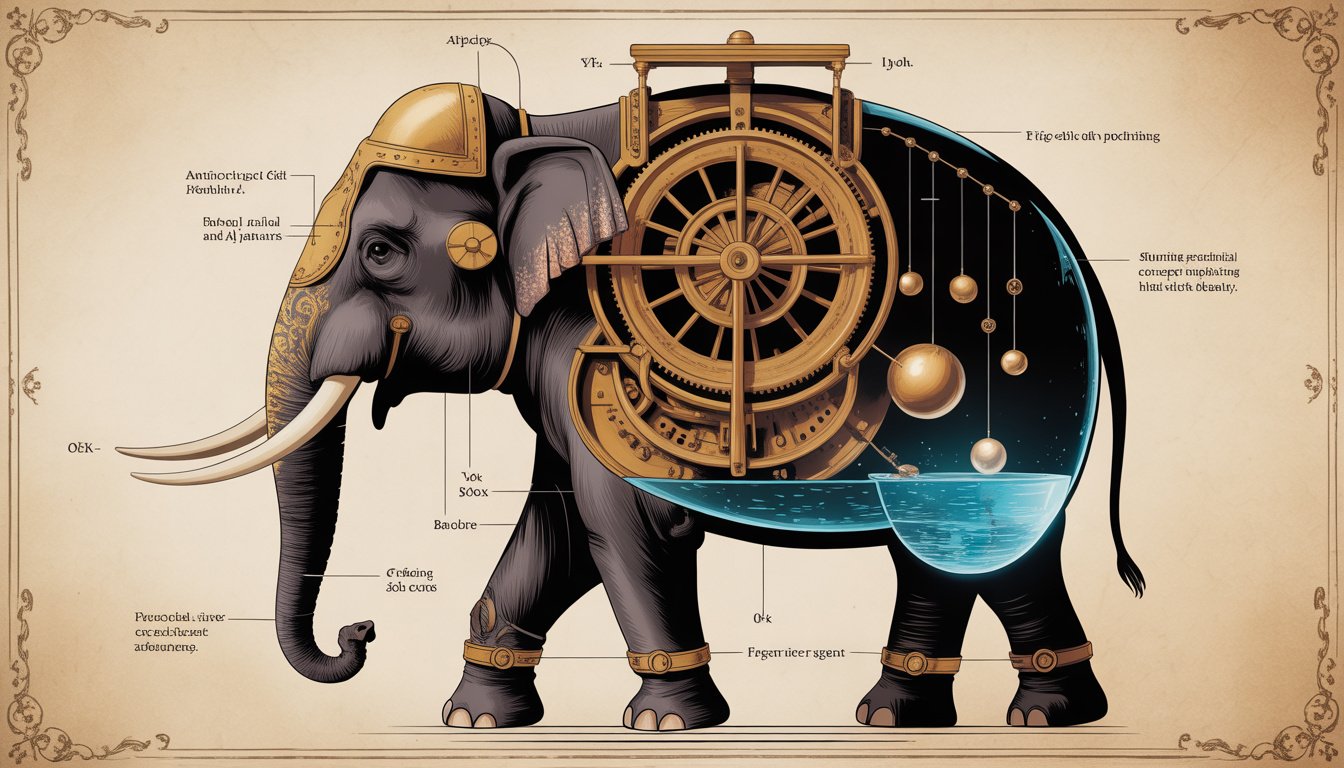
1. Al-Jazari: "The Father of Robotics" and the Elephant Clock One cannot mention the history of time without pausing for a long time in front of the "Elephant Clock." It was not just a tool to tell time, but the first "multicultural" message in history, combining in its design the Elephant (India), the Dragon (China), the Carpet (Persia), and the Turban (Arabs).

How did it work? Inside the elephant, there was a water tank containing a perforated bowl that sank slowly. When it sank, it pulled a string that released a metal ball from the dragon's mouth, dropping it into a cage, which moved the "driver" puppet atop the elephant to announce the passing of the hour.

The Genius: It was the first clock to use an "automation system"; meaning it worked and reset itself automatically without human intervention.

2. Banu Musa bin Shakir: Geniuses of Automatic Control Centuries before Al-Jazari, these three brothers in Baghdad presented amazing innovations in the "science of devices."

Valve Clocks: They used advanced systems of valves, floats, and balances to regulate water flow with extreme precision, making their clocks run for weeks without significant errors.

Programmed Music: They invented clocks from which mechanical birds emerged to tweet or play music at the top of every hour, paving the way for the invention of "music boxes" later.

3. The Castle Clock: The First Programmable Computer in History Al-Jazari also invented the "Castle Clock," a massive machine 3 meters high.

Features: It didn't just display time, but also displayed the lunar mansions and the solar zodiac.

First Programming: It contained a "mechanical orchestra" of puppets. Amazingly, these puppets could be "programmed" to play different tunes, making it classified today as the first programmable device in history.

Harun al-Rashid's Clock: Caliph Harun al-Rashid gifted a water clock to the King of France "Charlemagne"; when the King's entourage saw it and saw the puppets moving inside, they thought it contained "magic or demons" and fled from it!

Chapter 4: The Great Mechanical Clocks (When Time Found a Resounding Voice)

Chapter 4: The Great Mechanical Clocks (When Time Found a Resounding Voice)

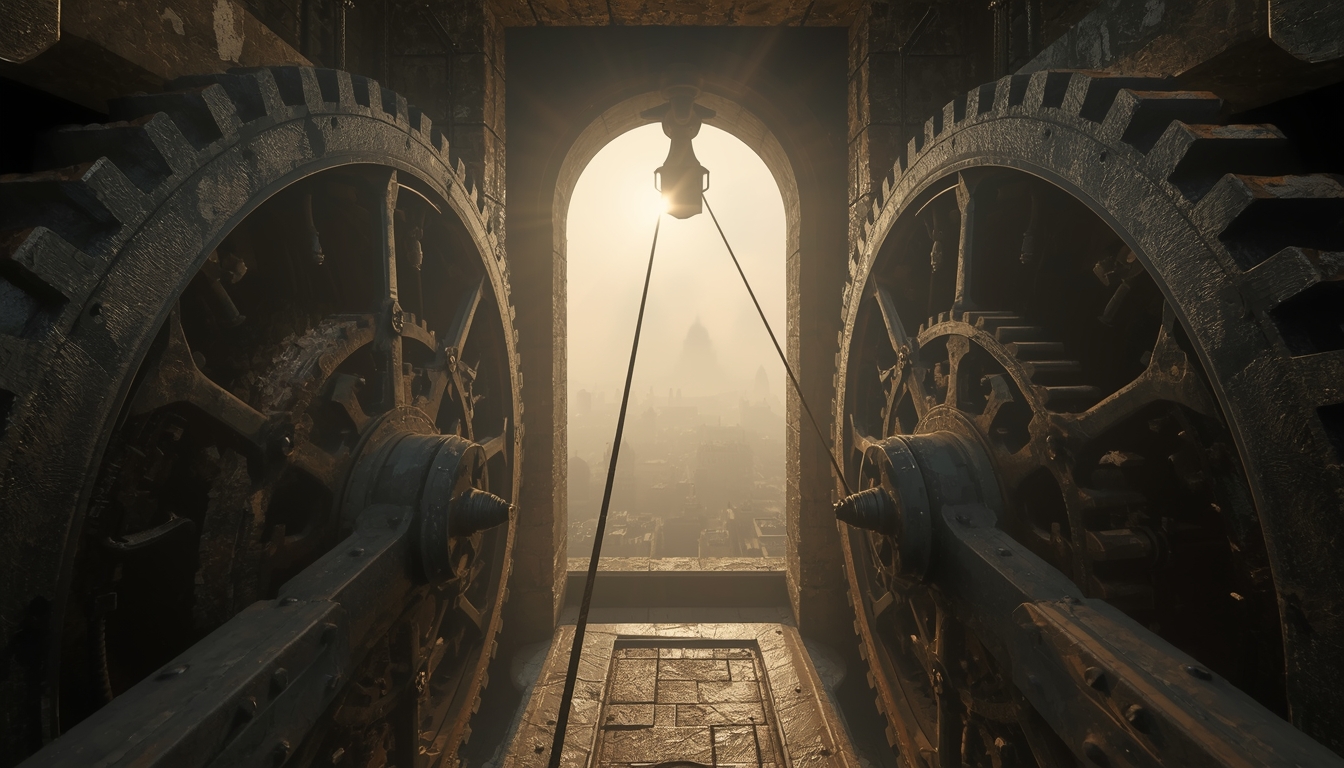
With the entry of the 14th century, a radical shift occurred. Humans no longer relied on water or sand, but began using the "force of gravity" and the metal "iron." Here, massive mechanical clocks were born that inhabited church towers and public squares, transforming time from a secret possessed by scientists into a rhythm regulating the life of the entire city.

1. Falling Weights: The Engine That Never Sleeps Before the invention of batteries, clocks worked with a simple but mighty force: Gravity.

How did it work? Very heavy stone or metal weights were hung by ropes wrapped around a cylinder. When the weight pulled the rope down, the axle turned and the gears moved.

The Challenge: The challenge was to prevent this weight from falling all at once. And here appeared the greatest mechanical invention of that era: "The Escapement."

2. The Escapement (Verge Escapement): The Secret of the First "Tick" This small part is the "brain" of the mechanical clock. It is what prevents the gears from spinning wildly, by "releasing" one gear tooth approximately every second.

The Result: Intermittent and regular movement. This invention created the "tick-tock" sound that changed human history, and made clocks run for several days with a single winding of the rope.

3. Tower Clocks: Setting the World's Rhythm People didn't have watches on their wrists, so tower clocks (like the Salisbury Cathedral clock or the Prague Astronomical Clock) were the only source of time.

Organizing Society: Thanks to these clocks, people began to know when markets opened, when prayers began, and when the workday ended. Time transformed from a "natural flow" into a "schedule."

The Amazing Truth: The first clocks didn't have "hands" at all! They only "struck" bells to inform people of the time (the word Clock is derived from the Latin word Clocca which means "bell").

The 15-Minute Error: The first mechanical clocks were so primitive that they might err by 15 to 30 minutes daily, and were reset every noon upon seeing the sun in the middle of the sky.

Prague Astronomical Clock: Considered the most complex clock in the Middle Ages, where it still today displays the position of the sun, moon, and zodiac signs in a stunning mechanical display.

Chapter 5: The Revolution of Precision (The Age of the Pendulum… When Science Found Its Voice)

Chapter 5: The Revolution of Precision (The Age of the Pendulum… When Science Found Its Voice)

Until the middle of the seventeenth century, time was "lost"; giant mechanical tower clocks could drift by as much as 15 minutes a day. The world needed a cosmic rhythm that never changed. The solution came from observing a simple, repetitive motion: oscillation.

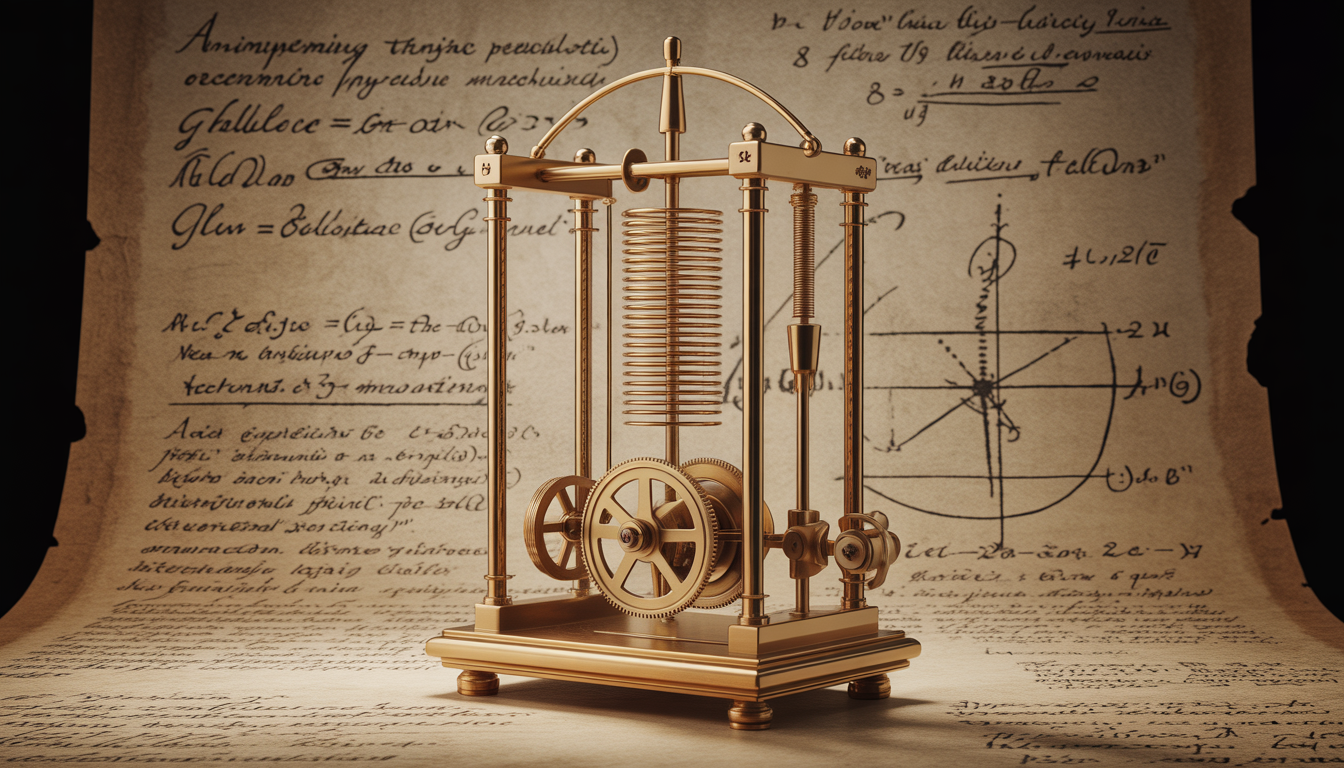
1. Galileo Galilei: A Pulse in a Cathedral The story begins in Pisa Cathedral, where the young Galileo watched a chandelier swinging from the ceiling. He noticed something strange: no matter whether the arc of the swing was wide or narrow, it seemed to take exactly the same amount of time to return.

The Discovery: This property is called "isochronism," and it is what made the pendulum the perfect heart of a clock.

2. Christiaan Huygens: The Birth of the First Accurate Clock (1656) While Galileo discovered the theory, it was the Dutch scientist Christiaan Huygens who turned it into a technical miracle. He connected the pendulum to the clock’s gear train, and a revolution began:

Dazzling Accuracy: The daily error shrank from about 15 minutes to less than 15 seconds.

The Arrival of the Minute Hand: Thanks to this new precision, people were no longer satisfied with just knowing the "hour." For the first time in history, the minute hand was added, followed later by the second hand, because the clock had finally become worthy of measuring them.

3. The Balance Spring: When the Clock Broke Free from Gravity Huygens faced a problem: a pendulum only works if the clock is upright and stationary. So he invented the "balance spring" (hair spring).

The Genius: This tiny spring played the role of the pendulum but within a very small space. It was the "Big Bang" that allowed clocks to shrink in size and move from the wall to the pocket, and then to the wrist.

The Tick of the Clock: The sound you hear as "tick‑tock" is actually the sound of the escapement striking the teeth of the gear to stop it from slipping under the force of the spring.

Clash of Giants: A fierce legal and historical dispute erupted between Huygens and the English scientist Robert Hooke over who had invented the balance spring first — a sign of how important this little piece of metal was at the time.

Chapter 6: The Clocks That Changed the World (The Longitude Dilemma and Lost Ships)

Chapter 6: The Clocks That Changed the World (The Longitude Dilemma and Lost Ships)

In the eighteenth century, the ocean was the only route that connected the world, but it was a road lined with death. The problem was not the winds or the waves, but time itself. Sailors could determine their position north and south, but they were completely "blind" when it came to east and west (longitude), which led to entire fleets being lost and thousands of lives destroyed.

1. The Great Disaster: Why Do We Need a Clock at Sea? To know where you are in the middle of the ocean, you must know the difference between your local time and the time at a fixed reference point (such as London). If your clock is off by just one minute, your ship can drift roughly 28 kilometers off course.

The Impossible Challenge: Pendulum and early mechanical clocks went "mad" at sea; humidity, temperature changes, and the violent motion of the ship made them stop or drift by hours.

2. John Harrison: The Carpenter Who Defied the Scientists The British government offered a huge cash prize (worth millions of dollars today) to whoever solved this dilemma. Many astronomers mocked the idea of using a mechanical clock and insisted the solution must be "astronomical." But a humble carpenter named John Harrison thought otherwise.

The 40‑Year Journey: Harrison spent his life building prototypes H1, H2, and H3, trying to create a clock that would not rust or be disturbed by motion.

The Miracle of H4: At last he built a large pocket‑watch‑like clock. On an 81‑day voyage across the Atlantic, H4’s total error was only about 5 seconds.

3. The Marine Chronometer: The Birth of Global Trade Thanks to Harrison’s invention, navigation became a precise science. Ships stopped disappearing, and empires were able to draw accurate maps of the world.

Harrison’s Legacy: Time was transformed from a "local concept" into a "global system." These marine chronometers paved the way for the later division of the world into time zones.

Why Greenwich? Because British marine chronometers were set to the time of the Royal Observatory in Greenwich, that meridian became the world’s zero line (GMT) to this day.

Amazing Technology: Harrison used innovations like the "bimetallic strip" to compensate for temperature changes, and almost friction‑free bearings, to keep his clocks accurate on long ocean voyages.

Chapter 7: Personal Timepieces (From the Pockets of the Elite to the Wrists of Heroes)

Chapter 7: Personal Timepieces (From the Pockets of the Elite to the Wrists of Heroes)

For a long time, owning a clock was impossible for the ordinary person. Timekeepers were pieces of furniture in homes or giant mechanisms in city towers. In this era, time began to shrink until it fit into the size of a hand, and then wrapped itself around the wrist.

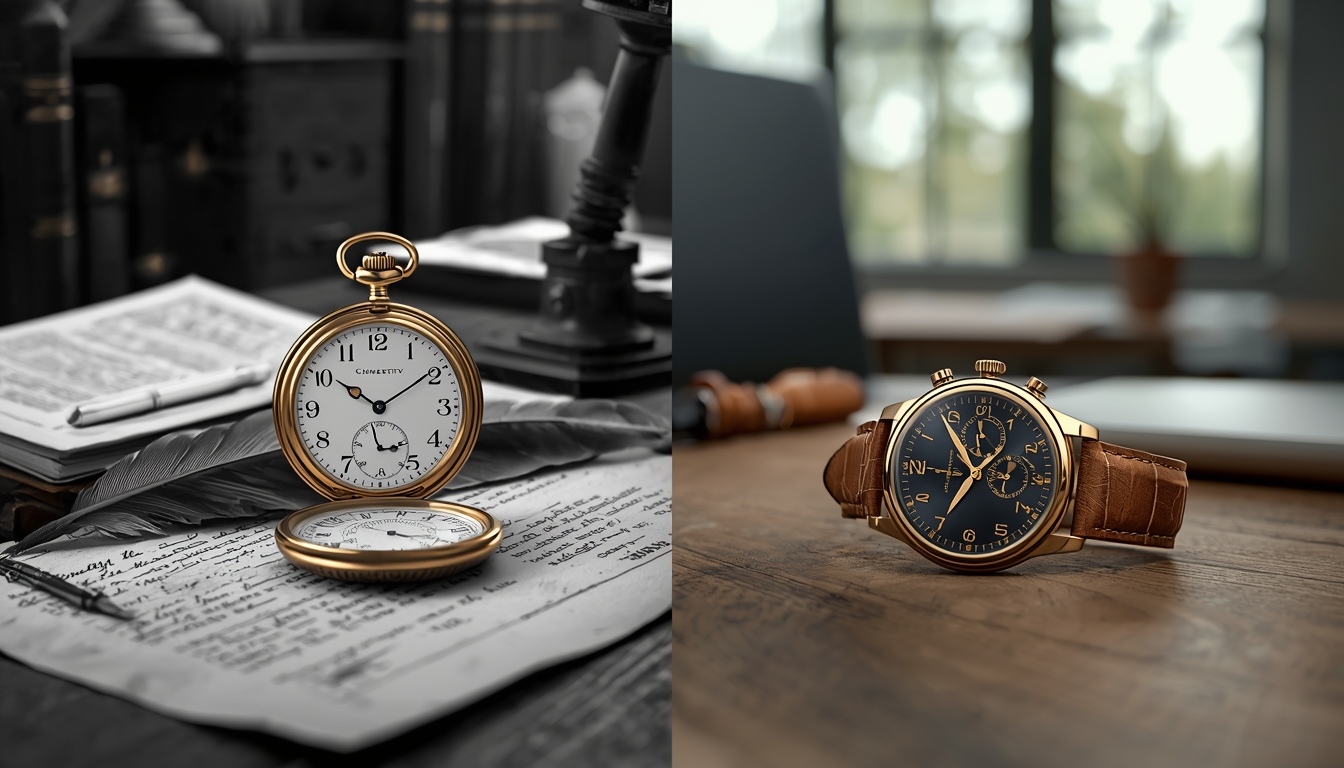
1. Pocket Watches: Symbols of Nobility and Poise In the eighteenth and nineteenth centuries, the pocket watch (Pocket Watch) was the pinnacle of elegance. It was carried in waistcoat pockets and attached with gold or silver chains.

Artistic Precision: These watches were not just tools for telling time; they were handmade works of art covered in intricate engraving. Switzerland was beginning to establish itself as the world’s capital of fine watchmaking.

The Amazing Truth: At that time, wristwatches were seen as "women’s jewelry" only, and a man wearing a watch on his wrist could easily be mocked.

2. The Trenches of War: The Birth of the Wristwatch Everything changed with the outbreak of the First World War. On the battlefield, officers needed to coordinate attacks to the exact second while holding their weapons; pulling out a pocket watch in the middle of combat was almost impossible.

The Military Solution: Soldiers soldered small metal lugs onto their pocket watches and strapped them to their wrists with leather bands.

The Trench Watch: This is how the wristwatch was born out of military necessity. After the war ended, soldiers returned home still wearing them, and the wristwatch transformed from a "weapon of war" into a global symbol of men’s style.

3. The Industrial Revolution: Time for Everyone With the rise of mass production by companies such as Hamilton and Waltham, watches became cheaper and more accurate. Time was no longer reserved for nobles; workers, clerks, and merchants could all own their own watch to catch trains and keep to work schedules.

Cartier Santos: The first dedicated men’s wristwatch, created in 1904 for aviator Alberto Santos‑Dumont by his friend Louis Cartier, so he could read the time while flying without taking his hands off the controls.

The Secret Glow: In early wars, numerals and hands were painted with radioactive radium to glow in the dark, before its dangers were discovered and it was replaced with safer luminous materials.

Chapter 8: The Digital Revolution (The Age of Quartz… When the World Started to Vibrate)

Chapter 8: The Digital Revolution (The Age of Quartz… When the World Started to Vibrate)

Until the middle of the 20th century, the clock depended on springs and gears. But in 1969, a "technological explosion" from Japan changed humanity’s relationship with time forever. The clock no longer needed a mechanical heart; it needed an electric pulse.

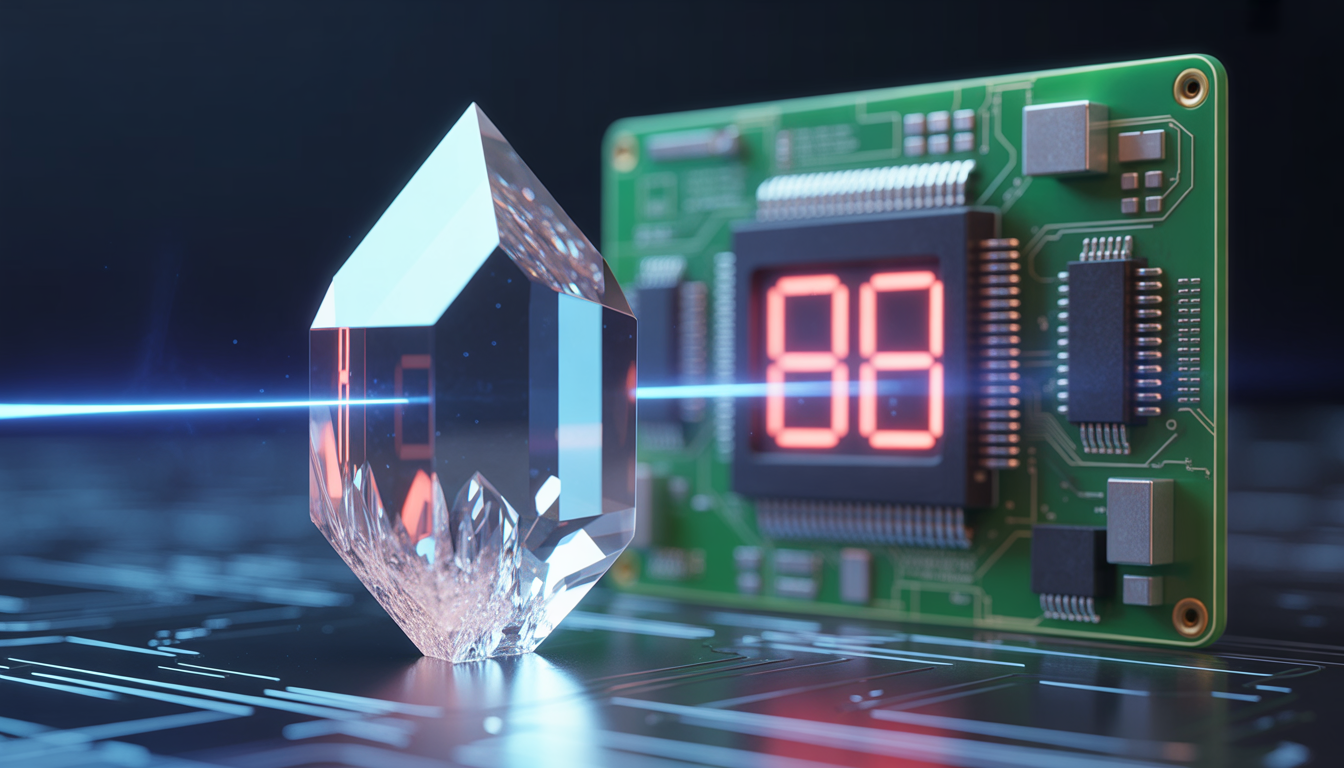
1. The Magic of Quartz: The Stone That Doesn’t Make Mistakes Scientists discovered that the quartz crystal has an astonishing property: when an electric current passes through it, it vibrates at a very stable frequency (32,768 times per second).

Extraordinary Accuracy: While the best mechanical clocks could drift by several seconds a day, a quartz watch might only be off by a few seconds per month.

Elegant Simplicity: With a small battery and a tiny electronic circuit, it became possible to build a watch that was both more accurate and far cheaper than the most complex Swiss mechanical movements.

2. The “Quartz Crisis”: Swiss Watchmaking on the Edge of Collapse This invention almost erased Switzerland’s history in watchmaking. In the 1970s, hundreds of Swiss factories shut down as the world rushed toward Japanese watches (like Seiko and Casio) that were cheap, precise, and modern.

The Irony: The Swiss were the ones who had built the first quartz prototypes, but they refused to adopt them, convinced that people would always prefer mechanical luxury.

3. Digital Displays (LCD): Time as Numbers For the first time in history, the "hands" disappeared. Watches appeared that displayed time as glowing numbers. The watch became a calculator, an alarm, and even a tiny electronic game worn on the wrist. Time shifted from a circular geometric shape to abstract digital data.

Casio F‑91W: One of the most iconic digital watches in history, still produced today with almost the same design since the 1980s, a symbol of simplicity and toughness.

Quartz Frequency: The number 32,768 is not random; it is 2 to the power of 15, which makes it easy for electronic circuits to keep dividing it down until they reach one pulse per second.

Chapter 9: The Age of the Atom (ExactTick and the Laws of Ultimate Physics)

Chapter 9: The Age of the Atom (ExactTick and the Laws of Ultimate Physics)

After thousands of years of dealing with shadows, water, and gears, humanity finally reached the "ultimate truth" of time. We discovered that everything before was just an approximation, and that the true clock is not in the sky nor in mechanics, but in the very heart of matter itself: inside the atom.

1. The Atomic Second: A New Definition of Existence In 1967, the world stopped defining the "second" as a slice of the Earth’s rotation (because our planet sometimes speeds up and sometimes slows down). Instead, we began measuring the second by the vibrations of atoms of a metal called cesium‑133.

How Does It Work? Imagine an atom vibrating at a terrifying speed; a single second is the time it takes this atom to vibrate exactly 9,192,631,770 times.

Mind‑Blowing Precision: Atomic clocks are so accurate that they would drift by only one second every 300 million years.

2. The Atomic Clock: Engine of the Digital World You might think you don’t need that level of precision, but in reality your daily life depends on it.

GPS Systems: The satellites guiding you on Google Maps each carry atomic clocks inside. If those clocks were wrong by just a millionth of a second, your location on the map could be off by hundreds of kilometers.

The Internet and Banking: Global financial transactions and the synchronization of internet networks rely on the "heartbeat" of atomic clocks to prevent digital chaos.

3. Einstein and Elastic Time: Time Is Not the Same for Everyone Thanks to atomic clocks, we proved Einstein’s theory of relativity in practice.

The Surprise: Time passes slightly faster on mountaintops than it does in valleys, and it passes more slowly the faster you move. Atomic clocks aboard satellites "age" differently from those on Earth, and scientists constantly adjust them to compensate for this physical difference.

The Leap Second: Because the Earth’s rotation is slowly decelerating, we sometimes add one extra second to the world’s official time to stay aligned with our planet’s spin.

UTC Time: Coordinated Universal Time is set by a global network of atomic clocks around the world; it is the master reference that controls the time on our phones and computers.

Chapter 10: The Future of Time (Beyond the Wrist… Toward the Stars)

Chapter 10: The Future of Time (Beyond the Wrist… Toward the Stars)

We now live in an age where time is no longer just a tool; it has become a "digital ecosystem." Time has moved beyond gears and atoms to become part of our technological awareness, and humanity still dreams of building clocks that challenge "extinction" itself.

1. Smartwatches: When Time Became a Computer Today, a watch no longer settles for telling you the time. In our current decade, the smartwatch has become a health companion and a personal assistant.

Total Integration: It monitors your heart rate, measures your blood oxygen level, and tells you how well you sleep. The watch has re‑connected to the human body more deeply than the traditional wristwatch ever did.

Absolute Synchronization: Your watch does not work alone; through the NTP protocol it is connected to a chain of atomic clocks scattered around the globe, which means that a billion people can share "the same second" at exactly the same moment.

2. The 10,000‑Year Clock: A Message to Future Generations Can a handcrafted machine live for 100 centuries? Engineers and scientists are currently building the "Clock of the Long Now" inside a mountain in Texas.

The Goal: It is a gigantic mechanical clock designed to tick once a year, with a mechanical bird emerging once every thousand years. It stands as a symbol of long‑term thinking and a reminder that our civilization is just a tiny "tick" in the age of the cosmos.

3. Martian Time: The Challenge of Space As we prepare for the colonization of Mars, we ran into a problem: a day on Mars (called a "sol") is longer than an Earth day by 39 minutes.

Planetary Clocks: Scientists have begun designing clocks that work with two time bases at once: Earth time to stay in touch with home, and Mars time to regulate the cycle of day and night on the Red Planet. Time is no longer tied to a single world.

The Nanosecond: In high‑frequency financial trading, profits are measured in nanoseconds (a billionth of a second). In that world, "time is money" is not a metaphor; it is literal.

The End of Time: In physics, some scientists predict that time itself may end inside a black hole or at the "heat death" of the universe, which makes our attempt to measure it a heroic act in the face of the ultimate ending.